Sacred Cow “Science”

<quote from Real Faith & Reason, vol 2>

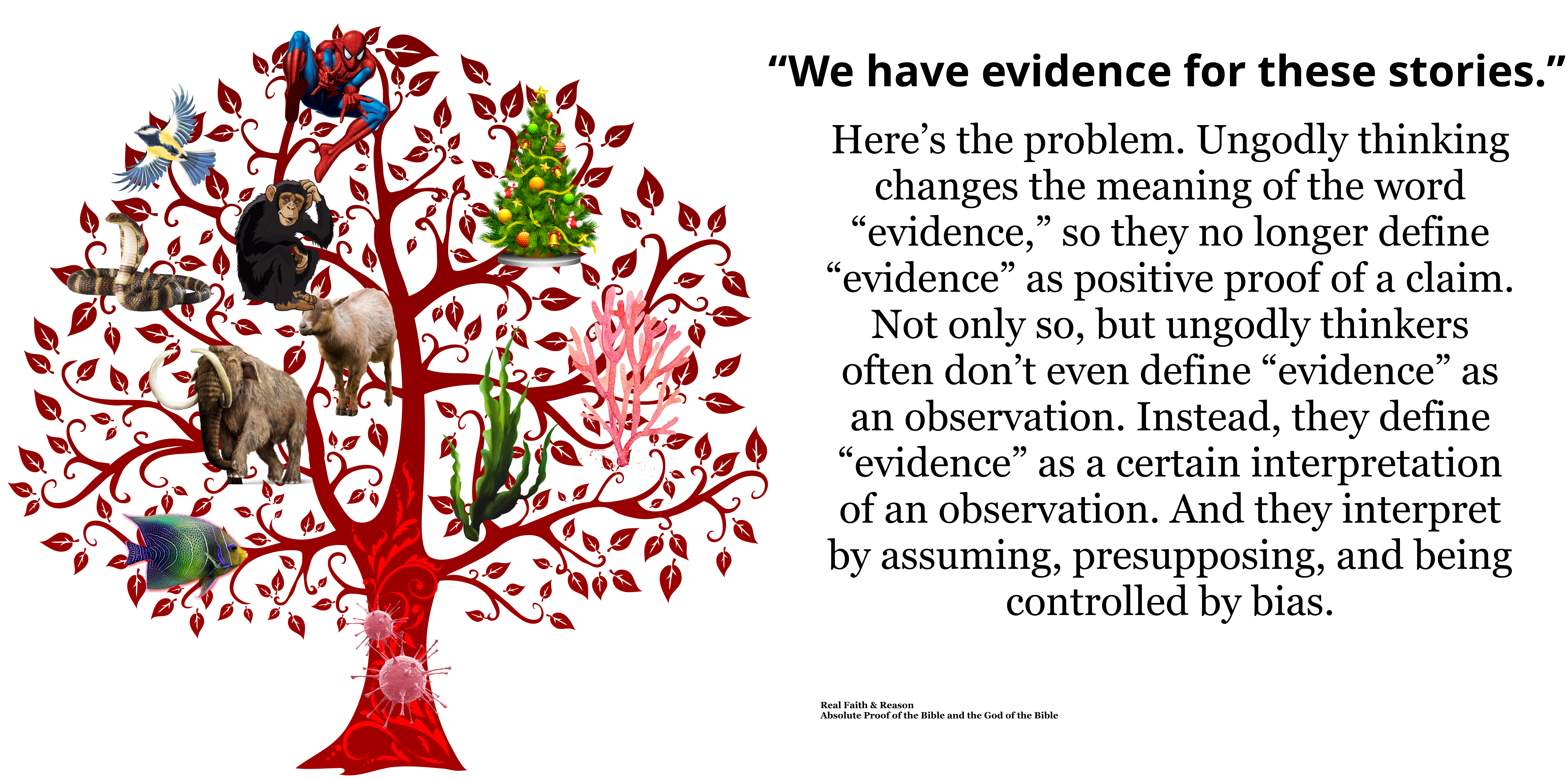
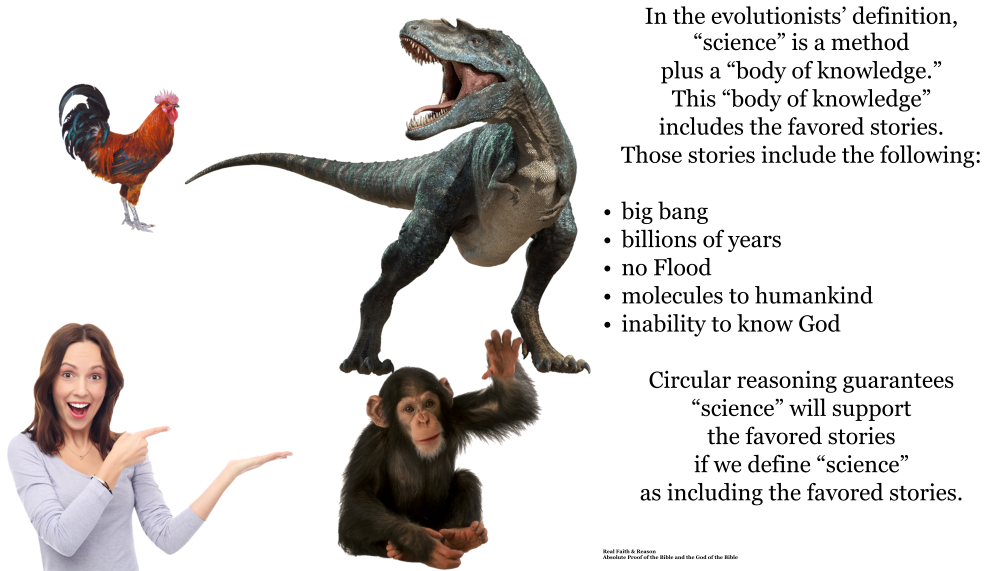
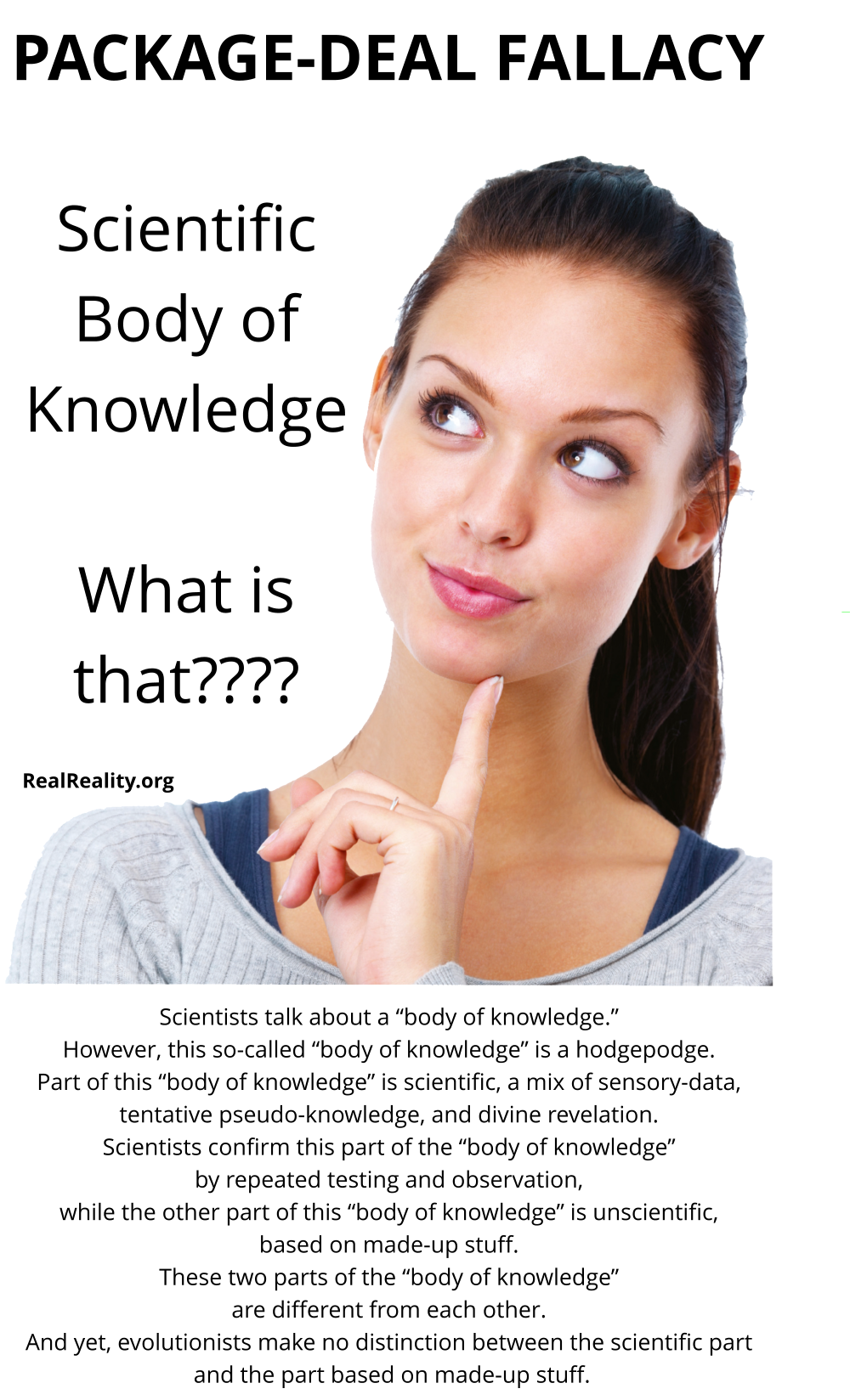
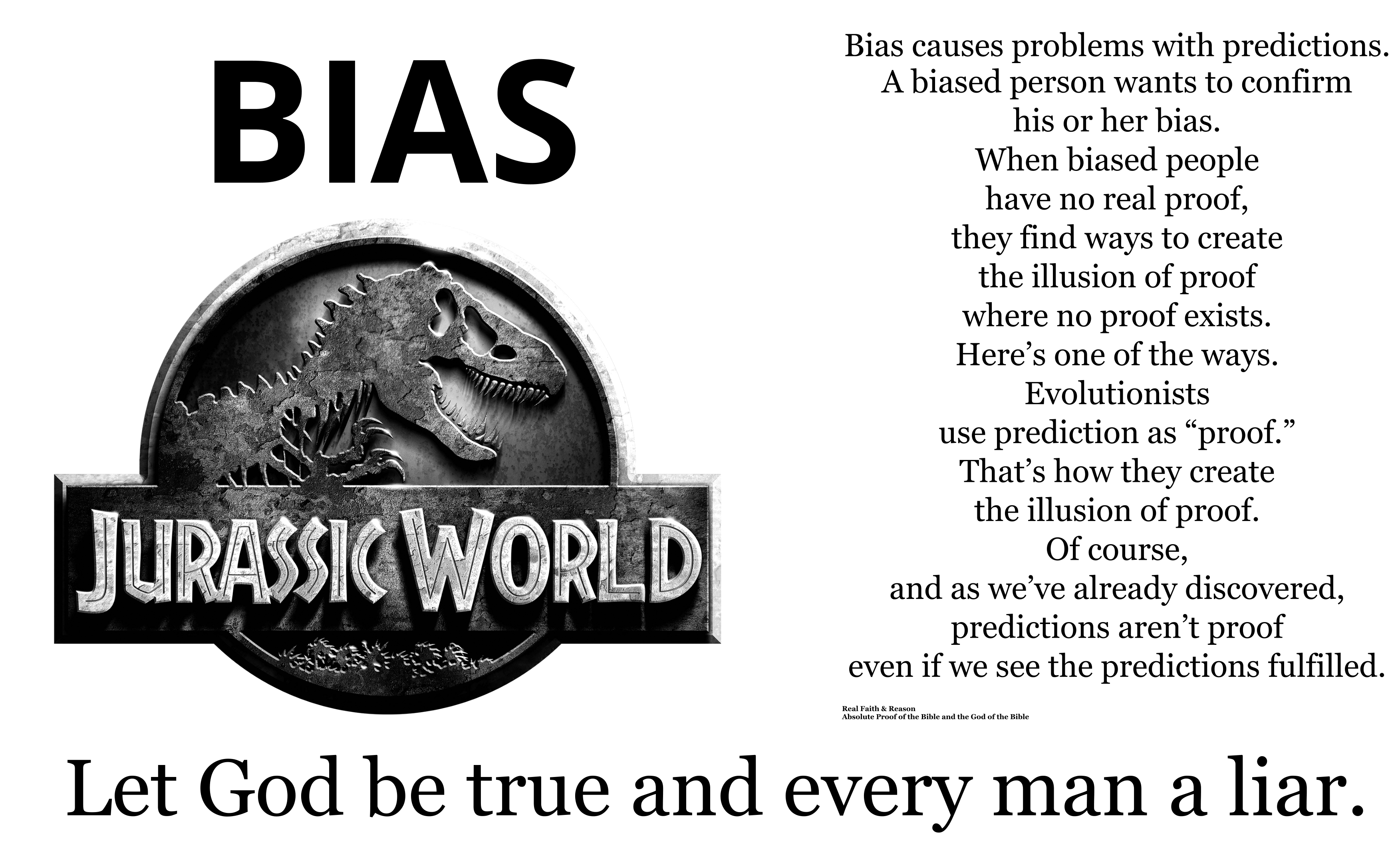
Some theories become sacred cows. With sacred-cow theories, scientists handle unexpected observations by making up additional stories to rescue the first story, the original theory. These are ad hoc rescuing hypotheses. It gets worse. They then claim these ad hoc rescuing hypotheses are additional predictions that “prove” the original story. Instead of questioning the original story, they think these additional just-so stories are additional proof. Over the years, the so-called “proof” keeps getting deeper. And yet, it’s all illusion. It’s all flimflam. It’s science by imagination.

While we see two complex thought processes, we can’t imagine the full complexity of the delusion. We see scientists making up ad hoc rescuing hypotheses (just-so stories) whenever they run into any scientific fact that conflicts with the sacred-cow theory. At the same time, we see scientists using their ability to make up stories to explain away the observations as proof for the sacred-cow story. They think their ability to make up a story or alibi is further proof of the sacred-cow theory. Of course, there’s considerable peer pressure on the scientist to back up the sacred-cow theory. Then, they use the fallacy of affirming the consequent as confirmation bias, and they end up even more committed to the sacred-cow theory. Scientists use many diverse thought processes to support sacred-cow theories. Often, the complexity and deceitfulness defy comprehension.

<end quote>

#RealFaith&Reason

Have you read this FREE book yet? “Real Faith & Reason” gives the absolutely certain proof of the Bible and the God of the Bible and shows how you can have real faith. This is faith that changes situations and transfigures you from glory to glory.

You can get your FREE copy of Real Faith & Reason, which shows the intersection of faith, reason, truth, and sanity.

http://RealReality.org/Real_Faith_and_Reason_Vol_2_-_Scientia.pdf

Follow on

https://mewe.com/i/petrosscientia

https://gab.com/RealReality

https://parler.com/profile/Petros542287384712/posts

Facebooktwitterredditpinterestlinkedintumblrmail

Observations Plus Stories = Stories

<quote from Real Faith & Reason, vol 2>

It all starts with observation. Then, scientists make up a story to explain the observation, but they assume no all-powerful God. They shoehorn their explanation into the current preconceived groupthink. Here’s the fake proof for the story. The story predicts the observation, and the observation proves the story. We recognize the circular reasoning smokescreen trying to keep us from knowing the story is just made-up stuff. We call this fallacy “affirming the consequent.”

<end quote>

#RealFaith&Reason

Have you read this FREE book yet? “Real Faith & Reason” gives the absolutely certain proof of the Bible and the God of the Bible and shows how you can have real faith. This is faith that changes situations and transfigures you from glory to glory.

You can get your FREE copy of Real Faith & Reason, which shows the intersection of faith, reason, truth, and sanity.

http://RealReality.org/Real_Faith_and_Reason_Vol_2_-_Scientia.pdf

Follow on

https://mewe.com/i/petrosscientia

https://gab.com/RealReality

https://parler.com/profile/Petros542287384712/posts

Facebooktwitterredditpinterestlinkedintumblrmail

Assumptions As Evidence

<quote from Real Faith & Reason, vol 2>
To look at it another way, scientists often use assumptions as evidence. That means they’re calling made-up stuff “evidence.” Therefore, the so-called “evidence” is no more valid than the made-up stuff. And now we’ve gone to the root of the problem of confusing make-believe with reality.
As an example of this circular reasoning, those who are skeptical about Jesus are often suckers for fables about the distant past. While they use the circular reasoning we just mentioned to support the fables, they suffer from other problems. For example, those fables of big bang, billions of years, and molecules to humankind depend on many just-so stories to explain away the evidence, and such poor logic may indicate motivated reasoning. The human mind is deceitful and desperately wicked, and it deceives through loopy logic.
<end quote>
#RealFaith&Reason
Have you read this FREE book yet? “Real Faith & Reason” gives the absolutely certain proof of the Bible and the God of the Bible and shows how you can have real faith. This is faith that changes situations and transfigures you from glory to glory.
You can get your FREE copy of Real Faith & Reason, which shows the intersection of faith, reason, truth, and sanity.
http://RealReality.org/Real_Faith_and_Reason_Vol_2_-_Scientia.pdf
Follow on
https://mewe.com/i/petrosscientia
https://gab.com/RealReality
https://parler.com/profile/Petros542287384712/posts
Facebooktwitterredditpinterestlinkedintumblrmail

Evolution Doesn’t Work

<quote from Real Faith & Reason, vol 2>

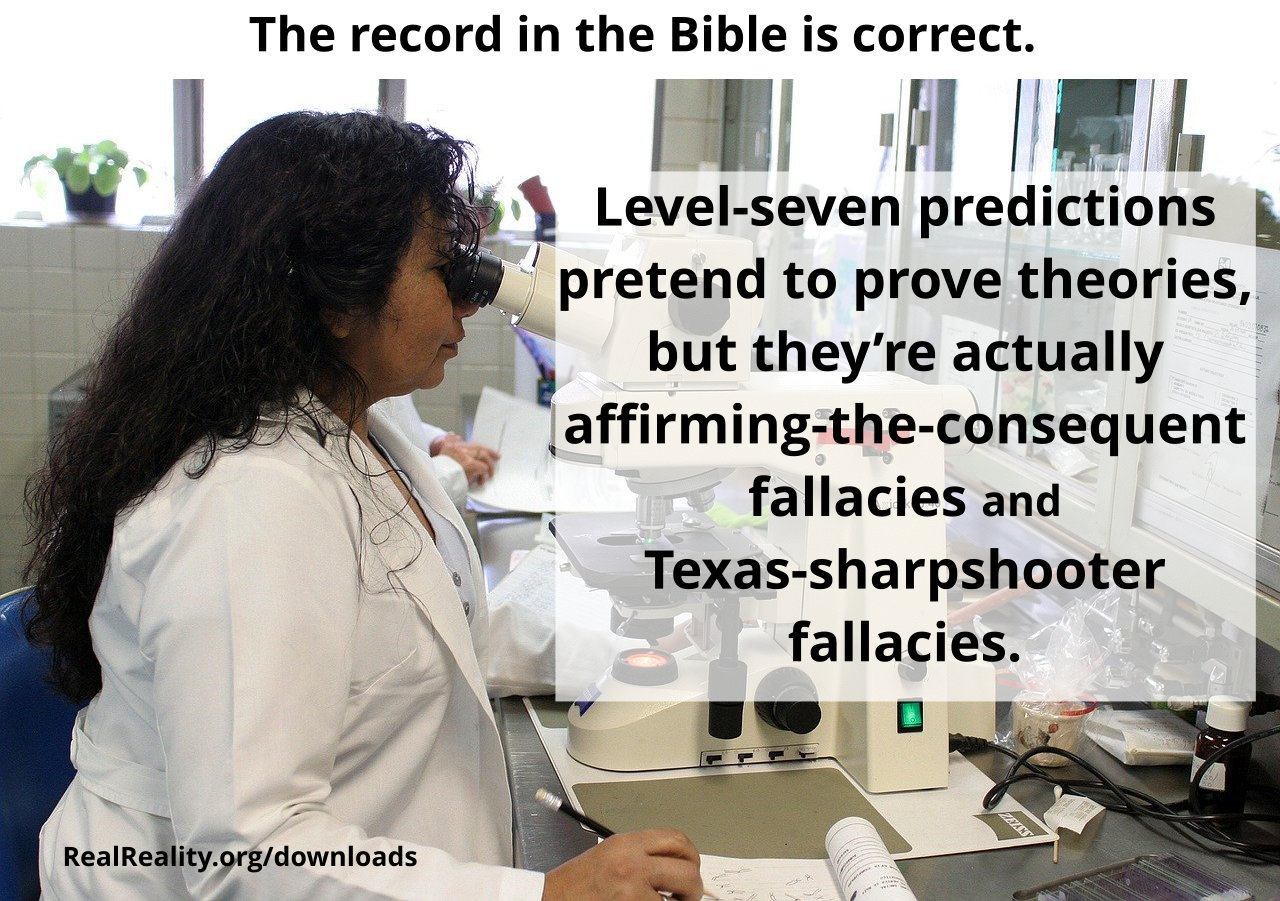
Even if a theory predicts accurately, accurate predictions can’t prove theories. We’ll cover the prediction argument next, but, in short, prediction-as-proof is a formal fallacy known as affirming the consequent.

<end quote>

#RealFaith&Reason

Have you read this FREE book yet? “Real Faith & Reason” gives the absolutely certain proof of the Bible and the God of the Bible and shows how you can have real faith. This is faith that changes situations and transfigures you from glory to glory.

You can get your FREE copy of Real Faith & Reason, which shows the intersection of faith, reason, truth, and sanity.

http://RealReality.org/Real_Faith_and_Reason_Vol_2_-_Scientia.pdf

Follow on

https://mewe.com/i/petrosscientia

https://gab.com/RealReality

https://parler.com/profile/Petros542287384712/posts

Facebooktwitterredditpinterestlinkedintumblrmail

Proving Theories?

<quote from Real Faith & Reason, vol 2>

Suppose a speculative explanation becomes a legitimate theory. A problem develops when the theorist makes the mistake of thinking observation has confirmed the theory. The theory goes beyond the observations. Therefore, the observation can’t prove the theory. However, schools teach students the observations prove theories, so they’re teaching irrational thinking. Here are the irrational steps:

  1. A scientist makes up a hypothesis to explain the observed and experienced facts.
  2. The scientist compares observations and experiences to the explanation.
  3. They don’t conflict, so the hypothesis is labeled “theory.” [That’s fine. There’s nothing wrong yet. The blunder is in the next step.]
  4. The scientist uses the observations and experiences to prove the explanation. [That’s circular reasoning.]

Some people think they’ve observed the explanation. Then they apply the label “scientific fact” to this circular reasoning.

Even if a theory predicts accurately, accurate predictions can’t prove theories. We’ll cover the prediction argument next, but, in short, prediction-as-proof is a formal fallacy known as affirming the consequent.

<end quote>

#RealFaith&Reason

Have you read this FREE book yet? “Real Faith & Reason” gives the absolutely certain proof of the Bible and the God of the Bible and shows how you can have real faith. This is faith that changes situations and transfigures you from glory to glory.

You can get your FREE copy of Real Faith & Reason, which shows the intersection of faith, reason, truth, and sanity.

http://RealReality.org/Real_Faith_and_Reason_Vol_2_-_Scientia.pdf

Follow on

https://mewe.com/i/petrosscientia

https://gab.com/RealReality

https://parler.com/profile/Petros542287384712/posts

Facebooktwitterredditpinterestlinkedintumblrmail

Theories Prove Nothing

<quote from Real Faith & Reason, vol 2>

Another problem develops in calling a theory a “scientific fact.” A theory speculates to explain a set of scientific facts. Scientists determined the scientific facts by repeatedly observing and testing, so they have tested the facts. Scientists made up the theory to extend beyond what scientists observed and experienced, so they can’t test the theory. Therefore, even though we can repeatedly test and confirm observations and experiences, we can’t repeatedly test and confirm explanations other than to test to see if they conform to the current observations and experiences. We can’t test theories since theories, by their nature, go beyond what we can test. Scientists propose predictability as a way to test theories, but we’ll discuss the problems of the predictability way of knowing in the next section.

A theory isn’t an observation but rather a speculative explanation of an observation that goes beyond the observation. We can repeatedly observe to verify the observation. We can check to see whether any part of the explanation conflicts with any part of the observation. However, speculative explanations of observations consist of made-up stuff. We can’t observe or test speculative explanations because they go beyond what we can observe or test.

Here’s where the irrational error comes in. First, a theorist makes up a speculative explanation for a set of observations. Then the theorist uses those observations to prove the explanation has changed to the status of a theory. However, that’s merely a check to make sure the explanation doesn’t conflict with the observations. It doesn’t prove the theory is part of reality. The theorist confirms the explanation isn’t in conflict anywhere with what scientists observe. Sometimes, a theory conflicts with observation, which means the scientist created a weak theory. A desperate theorist may make up a just-so story to explain away parts of the conflict and rescue the speculative explanation. This just-so story is known as a “rescuing hypothesis.” In that case, the theorist can’t legitimately call the speculative explanation “a scientific theory.” However, most scientists accept some stories they must prop up with rescuing hypotheses. They illegitimately call these stories “theories.”

<end quote>

#RealFaith&Reason

Have you read this FREE book yet? “Real Faith & Reason” gives the absolutely certain proof of the Bible and the God of the Bible and shows how you can have real faith. This is faith that changes situations and transfigures you from glory to glory.

You can get your FREE copy of Real Faith & Reason, which shows the intersection of faith, reason, truth, and sanity.

http://RealReality.org/Real_Faith_and_Reason_Vol_2_-_Scientia.pdf

Follow on

https://mewe.com/i/petrosscientia

https://gab.com/RealReality

https://parler.com/profile/Petros542287384712/posts

Facebooktwitterredditpinterestlinkedintumblrmail

Speculation or Revelation

<quote from Real Faith & Reason, vol 2>

Another problem develops in calling a theory a “scientific fact.” The problem is that a theory speculates to explain a set of scientific facts. Scientists determined the scientific facts by repeatedly observing and testing, so they have tested the facts. Scientists made up the theory to extend beyond what scientists observed and experienced, so they can’t test the theory. Therefore, even though we can repeatedly test and confirm observations and experiences, we can’t repeatedly test and confirm explanations other than to test to see if they conform to the current observations and experiences. We can’t test theories since theories, by their nature, go beyond what we can test. Scientists propose predictability as a way to test theories, but we’ll discuss the problems of the predictability way of knowing in the next section.

A theory isn’t an observation but rather a speculative explanation of an observation that goes beyond the observation. We can repeatedly observe to verify the observation. We can check to see whether any part of the explanation conflicts with any part of the observation. However, speculative explanations of observations consist of made-up stuff. We can’t observe or test speculative explanations because they go beyond what we can observe or test.

Here’s where the irrational error comes in. First, a theorist makes up a speculative explanation for a set of observations. Then the theorist uses those observations to prove the explanation has changed to the status of a theory. However, that’s merely a check to make sure the explanation doesn’t conflict with the observations. It doesn’t prove the theory is part of reality. The theorist confirms the explanation isn’t in conflict anywhere with what scientists observe. Sometimes, a theory conflicts with observation, which means the scientist created a weak theory. A desperate theorist may make up a just-so story to explain away parts of the conflict and rescue the speculative explanation. This just-so story is known as a “rescuing hypothesis.” In that case, the theorist can’t legitimately call the speculative explanation “a scientific theory.” However, most scientists accept some stories they must prop up with rescuing hypotheses. They illegitimately call these stories “theories.”

<end quote>

#RealFaith&Reason

Have you read this FREE book yet? “Real Faith & Reason” gives the absolutely certain proof of the Bible and the God of the Bible and shows how you can have real faith. This is faith that changes situations and transfigures you from glory to glory.

You can get your FREE copy of Real Faith & Reason, which shows the intersection of faith, reason, truth, and sanity.

http://RealReality.org/Real_Faith_and_Reason_Vol_2_-_Scientia.pdf

Facebooktwitterredditpinterestlinkedintumblrmail

Real Facts

<quote from Real Faith & Reason, vol 2>

Scientific facts are not facts in the sense that real facts are facts. Real facts are parts of reality. Scientific facts aren’t necessarily parts of reality. They’re what scientists will admit they have observed so far. Reality doesn’t change just because minds change. And no amount of testing can change reality. Reality is what exists, and truth is what exists. So, what is a real fact? It’s what exists. But scientists define “fact” much more loosely. Unlike real facts, scientific facts change over time if opinions change.

To make matters worse, in general conversation, the word “fact” means a statement. When people make statements, they think they’re stating facts. And the more fiercely they believe the statement, the more factual they think it is. So someone will say, “Let’s examine the facts,” and then list several unproven statements as if they were facts. As we can see, fog surrounds the word “fact.”

<end quote>

#RealFaith&Reason

Have you read this FREE book yet? “Real Faith & Reason” gives the absolutely certain proof of the Bible and the God of the Bible and shows how you can have real faith. This is faith that changes situations and transfigures you from glory to glory.

You can get your FREE copy of Real Faith & Reason, which shows the intersection of faith, reason, truth, and sanity.

http://RealReality.org/Real_Faith_and_Reason_Vol_2_-_Scientia.pdf

Follow on

https://mewe.com/i/petrosscientia

https://gab.com/RealReality

https://parler.com/profile/Petros542287384712/posts

Facebooktwitterredditpinterestlinkedintumblrmail

Two Definitions of the Word Fact

<quote from Real Faith & Reason, vol 2>

Regarding facts, two definitions for the word “fact” exist. OK, more than these two exist, but we’ll focus on the two: fact and scientific fact. It would seem that a scientific fact would be even more of a fact than just a plain old fact, but the opposite is the case.

For the plain old fact definition, the Merriam-Webster Dictionary defines “fact” this way:

1 : something that truly exists or happens : something with actual existence

2 : a true piece of information

A fact is true. But to know it’s true we must prove it. Proof is absolute, or it’s just a suggestion. However, if it’s possible that, sometime in the future, we could find out we were wrong, we don’t know that it’s true. While lies and misconceptions about reality change if they’re exposed, truth doesn’t change based on new information. Reality doesn’t change based on new information. In contrast, opinions about truth and reality do change based on new information. Facts are absolute, or they aren’t facts.
Contrast Webster’s definition of “fact with the National Center for Science and Education’s definition of “scientific fact”:

In science, an observation that has been repeatedly confirmed and for all practical purposes is accepted as “true.” Truth in science, however, is never final and what is accepted as a fact today may be modified or even discarded tomorrow.

<end quote>

#RealFaith&Reason

Have you read this FREE book yet? “Real Faith & Reason” gives the absolutely certain proof of the Bible and the God of the Bible and shows how you can have real faith. This is faith that changes situations and transfigures you from glory to glory.

You can get your FREE copy of Real Faith & Reason, which shows the intersection of faith, reason, truth, and sanity.

http://RealReality.org/Real_Faith_and_Reason_Vol_2_-_Scientia.pdf

Follow on

https://mewe.com/i/petrosscientia

https://gab.com/RealReality

https://parler.com/profile/Petros542287384712/posts

Facebooktwitterredditpinterestlinkedintumblrmail

God Reveals. Humanity Guesses.

If God reveals why and how, then we can know.

Otherwise, we’re just guessing.

<quote from Real Faith & Reason, vol 2>

It might help to return to the scientific method of Francis Bacon:

  1. observation
  2. induction
  3. hypothesis
  4. test hypothesis by experiment
  5. proof/disproof
  6. knowledge

We can apply this method to gravity.

  1. Observe objects all fall at the same rate.
  2. Use inductive reasoning to say this observation might apply universally.
  3. Develop a hypothesis. All objects will fall at the same rate if we can eliminate other factors like air resistance.
  4. Develop experiments to prove that all objects (at least the ones tested) fall at the same rate.
  5. Prove that all objects (at least the ones tested) fall at the same rate.
  6. Know that all objects (at least the ones tested) fall at the same rate. That has become a scientific fact.

We can notice this scientific method works for knowing what gravity does. However, the competing theories of gravity all try to guess why gravity works. What are we comparing? Where’s the difference? We know our observation of what gravity does isn’t the same as trying to guess why gravity does what it does. The first is observing. The second is guessing. Therefore, unless we can test and prove or disprove those theories, we don’t have a way that we can apply Francis Bacon’s scientific method to them.

There’s a huge difference between these two statements:

 Fact: All objects fall to the ground at the same rate.

 Theory: Gravity isn’t a force but rather a consequence of the curvature of spacetime caused by the uneven distribution of mass/energy.

The first is a scientific fact, but the second statement is the most popular theory. We don’t have a way, at present, to repeatedly test the theory to see whether the theory is true even in a tentative scientific way. By the way, Einstein received this theory in a moment of inspiration, so it may be a revelation from God.

The point we’re seeing is that there’s a difference between facts and theories. Let’s take a moment to apply this difference to what’s called “The Big Bang Theory,” the theoretical age of the earth, the study of abiogenesis, and what’s called “The Theory of Evolution.” What have scientists observed? Mostly rocks, deposits, fossils, and living organisms. We can repeatedly test rocks, deposits, fossils, and living organisms with experiments and observe the results. We can’t test the stories that go beyond what we can test or observe. We shouldn’t have to state this obvious fact. Yet, some people don’t get it.

<end quote>

#RealFaith&Reason

Have you read this FREE book yet? “Real Faith & Reason” gives the absolutely certain proof of the Bible and the God of the Bible and shows how you can have real faith. This is faith that changes situations and transfigures you from glory to glory.

You can get your FREE copy of Real Faith & Reason, which shows the intersection of faith, reason, truth, and sanity.

http://RealReality.org/Real_Faith_and_Reason_Vol_2_-_Scientia.pdf

Follow on

https://mewe.com/i/petrosscientia

https://gab.com/RealReality

https://parler.com/profile/Petros542287384712/posts

Facebooktwitterredditpinterestlinkedintumblrmail