Pseudo-science & Scientism

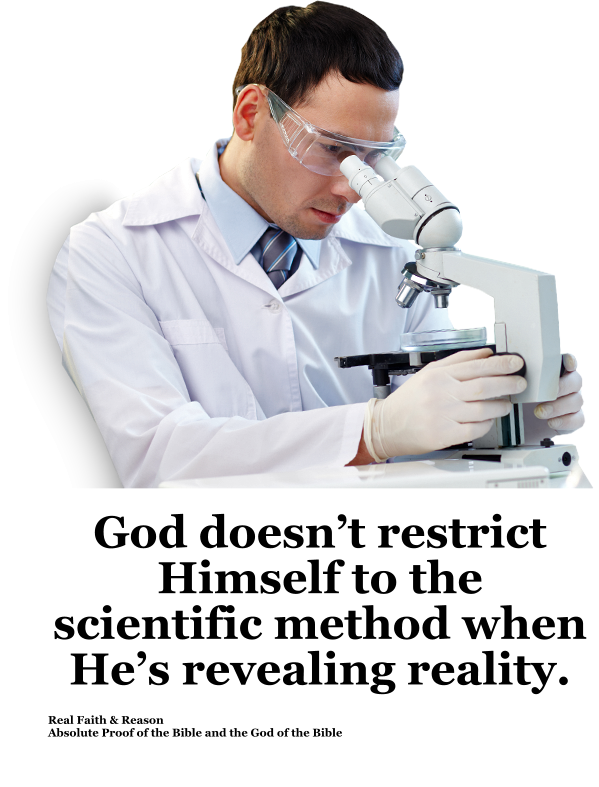
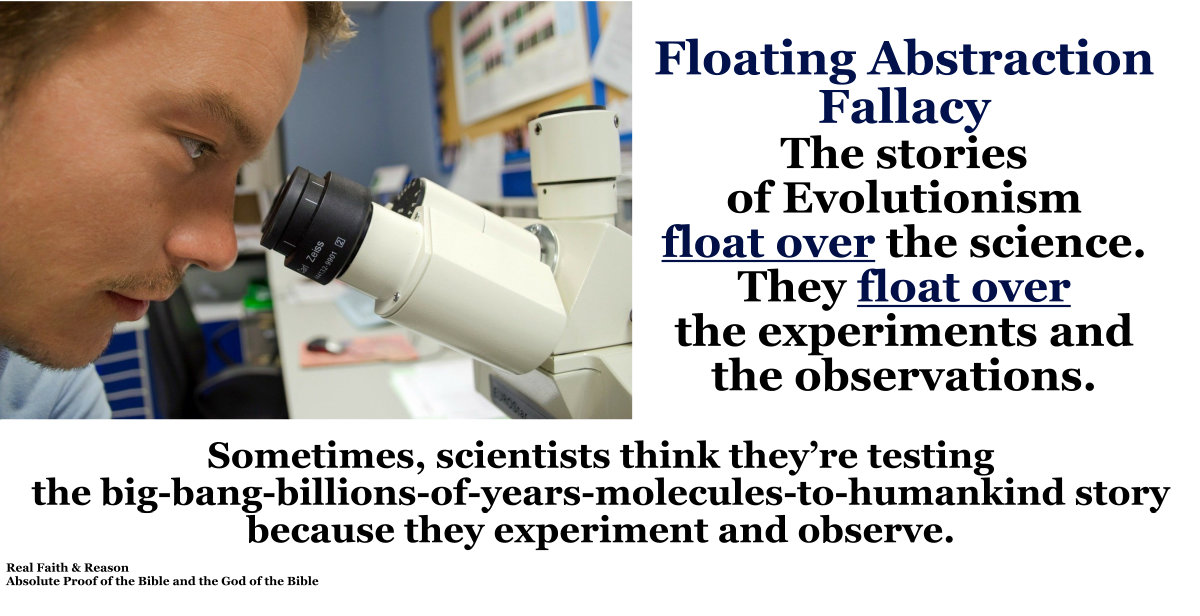
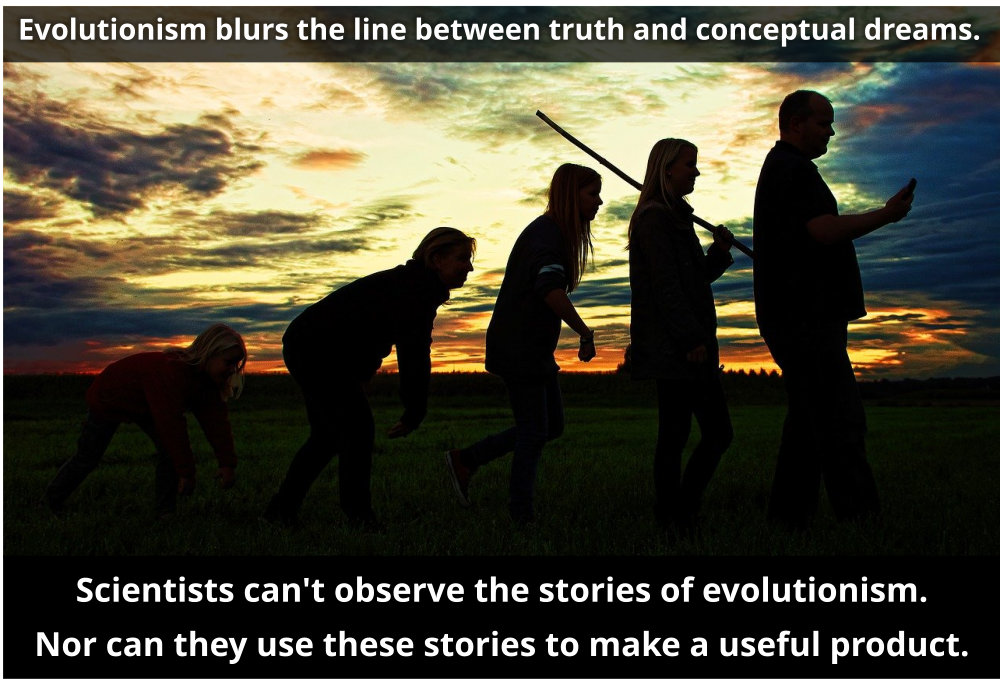
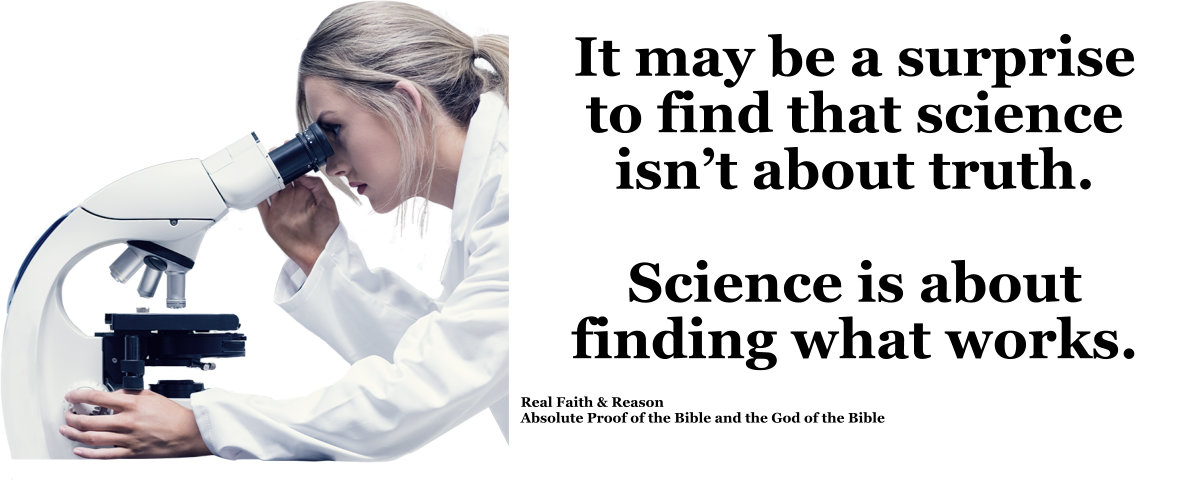
A problem arises with science if we start to think science leads to knowledge or truth. Science is pragmatic and only points to what seems to work. It’s never definitive. In addition, the word “science” has become a way for evil people to manipulate the gullible, which often may include the majority of the population. They say the word, but there is no real science. Not realizing the nature of science and censoring free thought in science is a way to destroy scientific value. It started with the age of the earth. Silly ideas about the age of the earth were well-promoted and began to be falsely called “science.” The age-of-the-earth pseudo-science served an important function for the ungodly thinkers. It cast doubt on Scripture, which was an important objective. It wasn’t a scientific goal. It was a goal of the religion of ungodliness. Then, evolutionism came along. It’s a religious idea that’s scientifically impossible, but ungodly people called it “science.” And much of Christianity said, “We must follow the science.” Much of Christianity blindly believed the liars who promoted billions of years of molecules-to-humanity evolution–a complete cult of evolutionism. They called it “science,” but it wasn’t and isn’t science. Next, came global cooling, then global warming, then man-made climate change. It was all pseudo-science. Now, they ignore science and censor anyone who actually follows science regarding pandemics in general and Covid 19 in particular.
<quote from Real Faith & Reason, vol 2>
Scientists often speak and write using the vague terms “inference” or “infer.” Inferring is concluding, but something’s not right about that. The word “inference” says that someone is reasoning to an inference, whatever “inference” means. Someone is reasoning, but is this person reasoning inductively and abductively? Neither inductive nor abductive reasoning can prove anything. Scientists infer using induction and abduction. Inferring is different from proving since the word “infer” means something closer to the word “conclude.” It’s a broader term than “deduce,” which implies sound deductive reasoning.
 
Is there a difference between concluding and inferring? Concluding must be conclusive, right? The word implies an end. It implies finality. The word “infer” doesn’t seem to have that finality. We can infer what’s untrue. It’s still irrational to do so, but when scientists say that they infer, they aren’t saying the same thing as when we say that we conclude. Notice how Dictionary.com defines “infer.”
 
to derive by reasoning; conclude or judge from premises or evidence: They inferred his displeasure from his cool tone of voice.
(of facts, circumstances, statements, etc.) to indicate or involve as a conclusion; lead to.
to guess; speculate; surmise.
to hint; imply; suggest.
 
Those four definitions provide a wide range for interpretation with the first two definitions being vague and the third and fourth being guessing and hinting. The first definition is the strongest, yet Dictionary.com didn’t specify the kind of reasoning. It could be irrational reasoning. The reasoning could be guessing, speculating, hinting, implying, or suggesting. Other dictionaries use the word “deduce,” but they don’t indicate whether that deductive reasoning is sound. Persuaders and speakers often use the words “conclude” and “infer” interchangeably. “Conclude” can mean simply to decide. It can mean using sound reasoning that starts with true premises and ends with a proved conclusion. Scientists, teachers, and politicians use this fuzzy language, which allows them to go off the track of truth without realizing it.
<end quote>
 
#RealFaith&Reason
 
Have you read this FREE book yet? “Real Faith & Reason” gives the absolutely certain proof of the Bible and the God of the Bible and shows how you can have real faith. This is faith that changes situations and transfigures you from glory to glory.
 
Amazon sells it, but you can get your FREE copy of Real Faith & Reason, which shows the intersection of faith, reason, truth, and sanity.
http://RealReality.org/Real_Faith_and_Reason_Vol_2_-_Scientia.pdf
Facebooktwitterredditpinterestlinkedintumblrmail

Proofs

<quote from Real Faith & Reason, vol 2>
“Proofs exist only in mathematics and logic, not in science. Mathematics and logic are both closed, self-contained systems of propositions, whereas science is empirical and deals with nature as it exists. The primary criterion and standard of evaluation of scientific theory is evidence, not proof.” ~ Psychology Today (https://goo.gl/sRkGyS)
 
So these thinkers say it’s all about evidence and not about proof at all.
 
If we search for the definition of “scientific proof,” we’ll usually get definitions of “scientific evidence” like the following:
 
“Scientific evidence is evidence which serves to either support or counter a scientific theory or hypothesis. Such evidence is expected to be empirical evidence and interpretation in accordance with the scientific method. Standards for scientific evidence vary according to the field of inquiry, but the strength of scientific evidence is generally based on the results of statistical analysis and the strength of scientific controls.” ~ Wikipedia (https://goo.gl/VVXeMd)
 
Other people say scientific theories can be proved and remain theories. But if we prove a theory, is it still theoretical? Theories aren’t proved facts.
 
When someone claims that scientific theories are proved, their definition of “proved” must be different from the way we’ve been defining “proof” on this journey. “Proof,” in the way we’re defining the word, results in absolute certainty. Just consider what’s written about germ theory (the theory that germs cause certain diseases) and notice the conflict:
 
“But it was the laboratory research of Louis Pasteur in the 1860s and then Robert Koch in the following decades that provided the scientific proof for germ theory.” ~ Science Museum Org (https://goo.gl/6k9UCu)
 
We can readily see the conflict between this quote about proving a theory and the previous quote that said proofs don’t exist in science. However, quotes about proving theories are all over the Internet. Here are a few more examples:
 
“The Italian Agostino Bassi was the first person to prove that a disease was caused by a microorganism” ~ Wikipedia (https://goo.gl/4YTp4p)
 
“Germ theory states that specific microscopic organisms are the cause of specific diseases. The theory was developed, proved, and popularized in Europe and North America between about 1850 and 1920.” ~ Harvard (https://goo.gl/ewipKu)
 
“Although the germ theory has long been considered proved” ~ Britannica (https://goo.gl/gLbvBU)
 
The way these writers use the word “proof” confuses the issue.
<end quote>
 
#RealFaith&Reason
 
Have you read this FREE book yet? “Real Faith & Reason” gives the absolutely certain proof of the Bible and the God of the Bible and shows how you can have real faith. This is faith that changes situations and transfigures you from glory to glory.
 
Amazon sells it, but you can get your FREE copy of Real Faith & Reason, which shows the intersection of faith, reason, truth, and sanity.
http://RealReality.org/Real_Faith_and_Reason_Vol_2_-_Scientia.pdf
Facebooktwitterredditpinterestlinkedintumblrmail

Christ Reveals Truth through Science Too

<quote from Real Faith & Reason, vol 2>
At this point of our journey, we want to review the way the words “proof” and “proved” are used differently by different people. Some scientists feel that science never proves anything. Scientists say that they infer based on evidence rather than saying that they prove based on proof. The first speaks of what may be mere opinion, but the second speaks in concrete terms of knowledge and certainty. Evidence isn’t necessarily proof. Inference isn’t necessarily sound reasoning. Support isn’t necessarily proof. An inferred conclusion isn’t necessarily known truth.
<end quote>
 
#RealFaith&Reason
 
Have you read this FREE book yet? “Real Faith & Reason” gives the absolutely certain proof of the Bible and the God of the Bible and shows how you can have real faith. This is faith that changes situations and transfigures you from glory to glory.
 
Amazon sells it, but you can get your FREE copy of Real Faith & Reason, which shows the intersection of faith, reason, truth, and sanity.
http://RealReality.org/Real_Faith_and_Reason_Vol_2_-_Scientia.pdf
Facebooktwitterredditpinterestlinkedintumblrmail

All Knowledge is Hidden in Christ

<quote from Real Faith & Reason, vol 2>
Those who refuse to acknowledge God miss most of the blessings of science, but God still blesses them and gives them some of His knowledge through science. They can find many things that work because of God’s divine revelation even though they refuse to acknowledge God or thank Him for the blessing of this knowledge. However, as mentioned previously, they’re limited because they can’t tell the difference between revelation and made-up stuff. Therefore, they can’t have certainty about anything. And yet, they accept that and reason as though their uncertainty were certainty. They may also be able to infer from the observations alone. If they don’t go beyond what they observe in the present, they can infer from that. However, when they try to guess beyond what they observe, they run into a problem. When ungodly thinkers try to reason about causes for what they observe, they don’t have a way to discern between truth and error or reality and make-believe. As a result, some of what’s called “science” comes from made-up stuff, while some of it comes from divine revelation. However, ungodly thinkers have no way to tell the difference between made-up stuff and divine revelation.
<end quote>
 
#RealFaith&Reason
 
Have you read this FREE book yet? “Real Faith & Reason” gives the absolutely certain proof of the Bible and the God of the Bible and shows how you can have real faith. This is faith that changes situations and transfigures you from glory to glory.
 
Amazon sells it, but you can get your FREE copy of Real Faith & Reason, which shows the intersection of faith, reason, truth, and sanity.
Facebooktwitterredditpinterestlinkedintumblrmail

Brute Beast

<quote from Real Faith & Reason, vol 2>

We already know that the apostle, Jude, mentioned pragmatism. We don’t have to be scientists to experience this pragmatism either. We use sense data to do common tasks, and we don’t have to acknowledge God to do that. So what? Bacteria and bugs do the same. Dogs, cats, and raccoons learn in this way. However, as Jude points out, they’re incapable of rational thought just like we are in those times when we fail to acknowledge God. If we want to reduce ourselves to the level of beasts, incapable of rational thought, we can proceed without God.

<end quote>

#RealFaith&Reason

Have you read this FREE book yet? “Real Faith & Reason” gives the absolutely certain proof of the Bible and the God of the Bible and shows how you can have real faith. This is faith that changes situations and transfigures you from glory to glory.

Amazon sells it, but you can get your FREE copy of Real Faith & Reason, which shows the intersection of faith, reason, truth, and sanity.

http://RealReality.org/Real_Faith_and_Reason_Vol_2_-_Scientia.pdf

Facebooktwitterredditpinterestlinkedintumblrmail

Can Science Yield Knowledge?

<quote from Real Faith & Reason, vol 2>
It’s not that science can’t lead to knowledge. Naturalistic science works from observation and reacting to sense data. That’s the nature of the brute-beast mind that God provides for humans in the same way God provides for animals. In addition to this brute-beast pseudo-knowledge, observation is one of the ways God speaks to us. He speaks to us through His creation and reveals reality to us through the things He has made. He speaks to all people this way as stated in The Letter to the Romans. He even speaks to those who refuse to acknowledge Him. True scientific method receives this revelation from God as we observe. Therefore, science can lead to knowledge whenever we listen to and yield to the Holy Spirit.<end quote>
 
#RealFaith&Reason
 
Have you read this FREE book yet? “Real Faith & Reason” gives the absolutely certain proof of the Bible and the God of the Bible and shows how you can have real faith. This is faith that changes situations and transfigures you from glory to glory.
 
Amazon sells it, but you can get your FREE copy of Real Faith & Reason, which shows the intersection of faith, reason, truth, and sanity.
http://RealReality.org/Real_Faith_and_Reason_Vol_2_-_Scientia.pdf
Facebooktwitterredditpinterestlinkedintumblrmail

The Source of Knowledge

<quote from Real Faith & Reason, vol 2>

On this trip, we’re going to island-hop from one supposed way of knowing to another. And we’ll start with a proposed way of knowing called “the scientific method.” Then we’ll proceed through several other proposed ways of knowing. In the process, we’ll learn something about how to know truth. Likewise, we’ll also expose the foolishness of some of these proposed ways of knowing.

We’ve already established the fact that all knowledge is hidden in Christ Jesus and that there’s no other source. We’ve also seen that made-up stuff is the only alternative to revealed knowledge. We’ve learned that worldviews, confirmation bias, and the axiomatic thinking fallacies cause a form of insanity. We also understand that the human mind can’t self-generate knowledge.

<end quote>

#RealFaith&Reason

Have you read this FREE book yet? “Real Faith & Reason” gives the absolutely certain proof of the Bible and the God of the Bible and shows how you can have real faith. This is faith that changes situations and transfigures you from glory to glory.

Amazon sells it, but you can get your FREE copy of Real Faith & Reason, which shows the intersection of faith, reason, truth, and sanity.

http://RealReality.org/Real_Faith_and_Reason_Vol_2_-_Scientia.pdf

Facebooktwitterredditpinterestlinkedintumblrmail

Ever Learning but Never Coming to a Knowledge of the Truth

<quote from Real Faith & Reason, vol 2>

The apostle Paul wrote prophetically about perilous times when people would love pleasure more than they love God. And Paul went on to say they would be “ever learning, and never coming to the knowledge of the truth.” (2 Timothy 3:1-7) From this Scripture, we see that it’s possible to learn untrue concepts and ideas, and in those cases, the words “education” and “learning” don’t apply to anything real. Education without truth is brainwashing and indoctrination. It educates students into ignorance and keeps them from knowing how to tell the difference between good and evil, truth and error, or reality and make-believe. So, many courses that propose to teach this difference fall short of it, but they encourage irrational thinking instead.

<end quote>

#RealFaith&Reason

Have you read this FREE book yet? “Real Faith & Reason” gives the absolutely certain proof of the Bible and the God of the Bible and shows how you can have real faith. This is faith that changes situations and transfigures you from glory to glory.

Amazon sells it, but you can get your FREE copy of Real Faith & Reason, which shows the intersection of faith, reason, truth, and sanity.

http://RealReality.org/Real_Faith_and_Reason_Vol_2_-_Scientia.pdf

Facebooktwitterredditpinterestlinkedintumblrmail

Proposed Fake Paths to Knowledge

<quote from Real Faith & Reason, vol 2>
We hear some thinkers speak of various forms of knowledge such as the following:
 
  • a posteriori knowledge
  • a priori knowledge
  • dispersed knowledge
  • domain knowledge
  • empirical knowledge
  • encoded knowledge
  • explicit knowledge
  • known unknowns
  • meta-knowledge
  • procedural knowledge
  • propositional knowledge
  • descriptive knowledge
  • declarative knowledge
  • situated knowledge
  • tacit knowledge
  • non-propositional knowledge
  • logical knowledge
  • semantic knowledge
  • systemic knowledge
 
The problem is that not one of these supposed forms of “knowledge” can get us to knowledge of the truth. When we examine each of them, we find hot air and no foundation for truth. Then the same people talk about concepts such as the following:
 
  • coherence theory of truth
  • correspondence theory of truth
  • pragmatic theory of truth
  • semantic theory of truth
  • redundancy theory of truth
  • logical empiricism to reason to truth
However, not one of these concepts can get us to knowledge of the truth either.
 
And then there are those who claim to know that no truth can be known, but they’re refuting themselves. Their claim is internally conflicted. Plus, they’re claiming to know the status of every person who has ever lived. They’re denying that God knows all things, cannot lie, and reveals truth to those who seek Him. But they’re making that denial based on a bare claim. They’re just making it up and claiming that it’s true. They have no basis in fact. They’re claiming to know the spiritual experience of every person who ever lived, and they’re gaslighting millions of followers of Christ to whom Jesus Christ reveals absolute, though partial, truth. In other words, they’re claiming to be omniscient, knowing all things. But they’re lying to us.
 
And these are the experts on knowledge. They know nothing about truth, and they teach in universities.
<end quote>
 
#RealFaith&Reason
 
Have you read this FREE book yet? “Real Faith & Reason” gives the absolutely certain proof of the Bible and the God of the Bible and shows how you can have real faith. This is faith that changes situations and transfigures you from glory to glory.
 
Amazon sells it, but you can get your FREE copy of Real Faith & Reason, which shows the intersection of faith, reason, truth, and sanity.
http://RealReality.org/Real_Faith_and_Reason_Vol_2_-_Scientia.pdf
Facebooktwitterredditpinterestlinkedintumblrmail

ALL Knowledge is Hidden in Christ Jesus

<quote from Real Faith & Reason, vol 2>
Let’s get obvious again. There’s a difference between knowledge and opinion. Unfortunately, this difference isn’t always clear. Reality is real and excludes all unreality. Knowledge is knowledge because it’s certainty about reality and truth. However, if we can’t know truth with certainty, everything is vapor. So without certainty, what poses as discussion merely attempts to manipulate others and gain control over them.
<end quote>
 
#RealFaith&Reason
 
Have you read this FREE book yet? “Real Faith & Reason” gives the absolutely certain proof of the Bible and the God of the Bible and shows how you can have real faith. This is faith that changes situations and transfigures you from glory to glory.
 
Amazon sells it, but you can get your FREE copy of Real Faith & Reason, which shows the intersection of faith, reason, truth, and sanity.
http://RealReality.org/Real_Faith_and_Reason_Vol_2_-_Scientia.pdf
Facebooktwitterredditpinterestlinkedintumblrmail